That constant drip, drip, drip from your kitchen or bathroom faucet isn’t just annoying—it’s wasting water and hiking up your utility bills. In Quincy, where many historic homes feature older plumbing systems, leaky faucets are a common headache. But before you call in the pros, why not try fixing it yourself? At Quincy Plumbing, we’ve helped countless homeowners in the area tackle these issues with simple DIY solutions. In this guide, we’ll walk you through practical steps to stop the leak, tailored for Quincy residents dealing with everything from hard water buildup to aging pipes. Whether you’re in Downtown Quincy or out in Payson, these tips can save you time and money.
Why Leaky Faucets Are a Big Deal in Quincy
Quincy’s water supply, drawn from the Mississippi River, can lead to mineral deposits that accelerate wear on faucets. According to local utility reports, a single dripping faucet can waste up to 3,000 gallons of water per year—enough to fill a small swimming pool! Beyond the environmental impact, this can strain your wallet, especially with rising water rates in Adams County. Fixing a leaky faucet isn’t just about silence; it’s about conservation and cost savings for your household.
If your home was built before the 1980s, like many in Quincy’s charming neighborhoods, you might be dealing with compression or cartridge-style faucets prone to leaks from corrosion. Don’t worry—we’ll cover identification and repair for all types.
Tools and Materials You’ll Need
Before diving in, gather these essentials. Most are available at local Quincy hardware stores like Ace Hardware on Broadway Street.
Basic Toolkit
- Adjustable wrench or pliers
- Screwdriver set (Phillips and flathead)
- Allen wrench (for some modern faucets)
- Bucket or towel to catch water
- Plumber’s tape (Teflon tape)
- Replacement washers, O-rings, or cartridges (match your faucet type)
Safety First
Turn off the water supply under the sink or at the main valve. In older Quincy homes, this might mean shutting off at the basement level. Pro tip: Test the shutoff valves beforehand; if they’re stiff or leaking, it could signal broader issues like those addressed in our whole house repiping services.
With your tools ready, you’re set to diagnose and repair.
Identifying Your Faucet Type
Not all faucets are created equal, and the fix depends on the style. Quincy homes often mix vintage and modern fixtures, so start here.
Compression Faucets: The Classic Culprit
These are the oldest type, common in pre-1990s builds around Hannibal and Quincy’s west side. They use a rubber washer that compresses against a seat to stop water flow. Leaks usually come from worn washers or corroded seats.
Cartridge Faucets: Modern and Single-Handle
Found in newer renovations, these use a cylindrical cartridge. Leaks often stem from cracked O-rings or a faulty cartridge itself. If DIY doesn’t cut it, consider our faucet replacement for a seamless upgrade.
Ball Faucets: The Three-Handle Variety
Less common but seen in some Quincy kitchens, these have a ball mechanism with springs and seals. Mineral buildup from local water can cause these to drip.
Ceramic Disk Faucets: Durable but Tricky
These high-end models use ceramic disks for longevity. Leaks here might indicate seal failure—rare, but fixable with care.
Take a peek under your sink: remove the handle (usually a screw hidden by a cap) to inspect. Note the mechanism for the next steps.
Step-by-Step DIY Repair Guide
Now, let’s get hands-on. Follow these steps based on your faucet type. Always work slowly to avoid damaging delicate parts.
Step 1: Disassemble the Faucet
- Cover the sink drain with a rag to catch small parts.
- Remove the handle: Pry off the decorative cap, unscrew the handle screw, and lift it off.
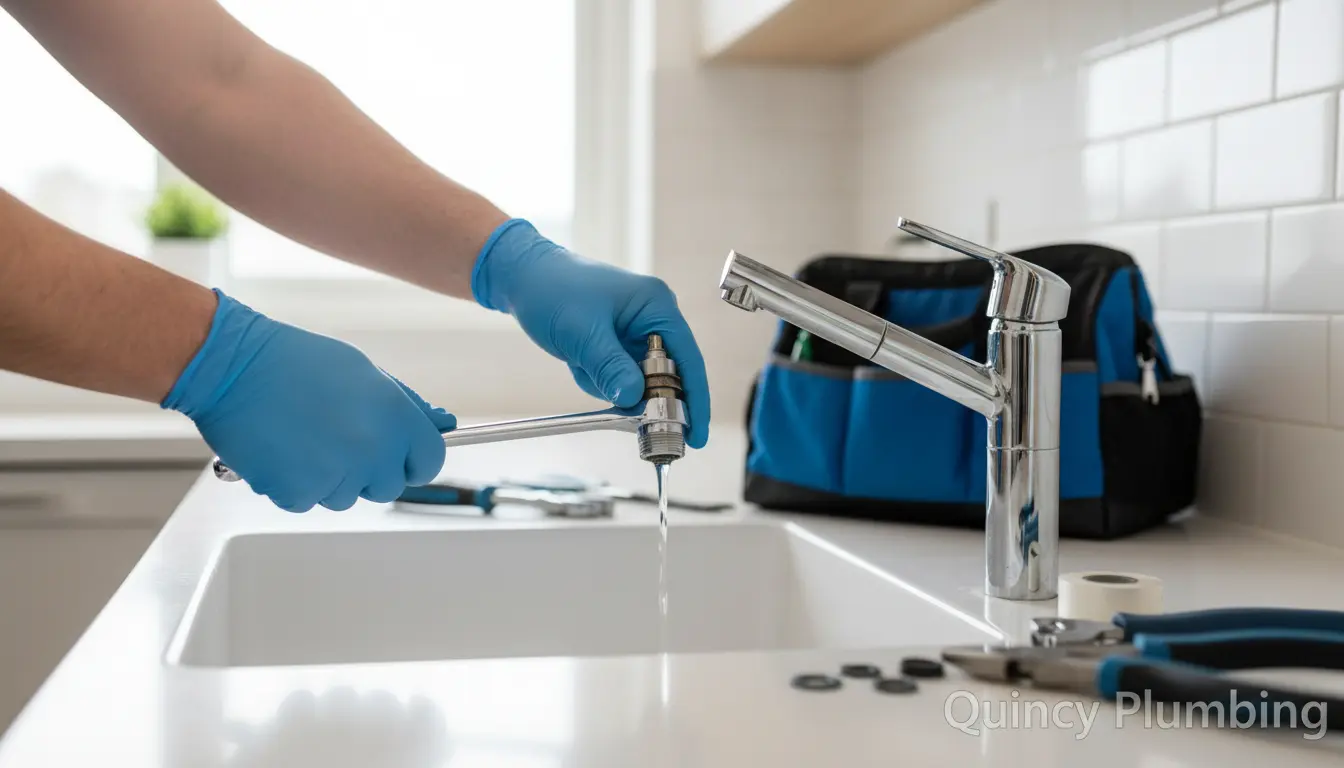
- Expose the stem or cartridge: Use your wrench to loosen the packing nut (the large hex-shaped piece).
- Pull out the stem, cartridge, or ball assembly. Inspect for wear—look for cracks, mineral buildup, or flattened washers.
In Quincy’s humid climate, corrosion is common, so clean parts with vinegar to dissolve deposits.
Step 2: Replace Worn Components
For compression faucets:
- Swap the old washer for a new one (cone-shaped for better seal).
- If the seat is pitted, use a seat wrench to remove and replace it, or smooth it with a reseating tool.
- Wrap the threads with plumber’s tape for a watertight fit.
For cartridge faucets:
- Pull out the old cartridge and insert a matching new one (take the old to the store for exact fit).
- Lubricate O-rings with silicone grease to prevent future leaks.
Ball faucets require replacing the entire ball kit, including seals and springs—inexpensive but precise.
Ceramic disk: Clean the cylinder housing thoroughly; replace seals if needed.
Step 3: Reassemble and Test
- Reinsert components, tighten the packing nut snugly (don’t overtighten to avoid cracking).
- Replace the handle and turn the water back on slowly.
- Run hot and cold water, checking for drips. Adjust as needed.
If it still leaks, the issue might be deeper, like pipe corrosion. For persistent problems in your Mendon home, our hydro jetting service can clear underlying buildup without invasive work.
Common Mistakes to Avoid
DIY plumbing sounds straightforward, but pitfalls abound:
- Overtightening: This strips threads or cracks porcelain. Use steady, even pressure.
- Ignoring Water Shutoff: Flooding your Quincy kitchen is no fun—always double-check.
- Wrong Parts: Mismatched washers lead to more leaks. Bring your old parts to the store.
- Skipping Maintenance: After repair, clean aerators monthly to combat Quincy’s hard water.
If a leak reveals a clogged sink, address it promptly to prevent backups.
When to Call the Professionals
DIY is empowering, but some situations call for experts. If the leak persists after replacement, involves the main water line, or if your home’s plumbing shows signs of age (common in Quincy’s 19th-century structures), it’s time to reach out. At Quincy Plumbing, our licensed technicians serve all of Adams County, from Clayton to the riverfront. We offer everything from quick fixes to full water heater installation if your system needs an upgrade.
FAQ: Leaky Faucet Fixes
1. How much does a DIY faucet repair cost?
Typically $10-50 for parts like washers and cartridges. Compare that to $150+ for pro service—great savings for simple jobs!
2. Can I fix a leaky faucet without turning off the water?
No, it’s risky. Always shut off to avoid sprays. In multi-story Quincy homes, isolate the line if possible.
3. Why does my faucet leak only hot water?
Often a worn washer in the hot side or scald guard issue. Check both, but if it’s the heater, we can inspect.
4. How often should I check my faucets in Quincy?
Quarterly, especially with our mineral-rich water. Prevent leaks before they start.
5. What if the leak is from the base of the faucet?
This points to loose connections or failed O-rings. Tighten the mounting nut underneath; if not, professional faucet replacement might be best.
Conclusion: Take Control of Your Plumbing Today
Fixing a leaky faucet is a win for your wallet, your home, and the environment. With these DIY tips from Quincy Plumbing, you can silence that drip and enjoy a quieter, more efficient household. Remember, Quincy’s unique plumbing challenges—like older pipes and hard water—mean regular maintenance is key. If your repair attempt uncovers bigger issues or you’re not comfortable DIY-ing, don’t hesitate to contact our team at Quincy Plumbing. We’re here to serve Quincy and surrounding areas with reliable, fast service. Give us a call today for a free estimate and keep your home flowing smoothly!